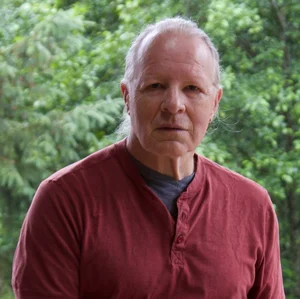
2. Notice Yourself
In My Body, In the World
This writing project follows the path of how my somatic practice, beginning from its beginnings as a massage therapist, has evolved into a way of being, not just with each person who comes to my clinic door, but with myself.
Every noticing is a stopping, like a snap shot of your life in this moment.
Throughout this writing project, I start by noticing the act of writing, the sensations that tell me of the ebb and flow of the forces managing the translation of my intention into into a physical act.
There’s a curious edge here. I can feel the tensions that tell me of the conflicts in my writing style. And yet I can also feel a hint of a meditative calm that comes from exploring the form of cursive writing (where all of my writing here began).
When I stop writing I notice the contrast between the activities I use to divert myself from my anxiety and the settledness that begins as I re-enter the writing arena. It occurs to me that if is engagement in creative process.
Listening for the Emerging Story
Every moment that I sit here, putting pen to paper is a connection to what wants to emerge in this moment.
The connection that lies between activity - that brings sensation - and stillness where it is possible to take in what has been awakened. The charge settles; this is the relationship between yang and yin. It is breathing. What has been created?
In this moment, I notice the sensations that tell of holding in my diaphragm. Noticing breath, reflective space. Noticing is only half the equation. Stopping to take in, to be affected and to allow the effects to spread. Reflective space is essential for integration.
The act of writing becomes an embodiment practice, bringing awareness and engagement with my sensory being. And so we begin.
Two Paradigms of Massage Practice
My massage training was informed by the classic paradigm: the manual manipulation of the soft tissues of the body. This is done in aid of two outcomes: reducing pain, increasing function
What I am going to describe to you is a paradigm that assumes that there is a far more useful outcome: to re-inhabit our sensory landscape
And so to begin.
Where do I start in describing my experience facilitating recovery of the inner sensory landscape of others?
It starts with myself.
What do I notice when I engage with another? It starts with the effect of the contact on me.
It asks the questions: Can I stay in my body? Does my own sense of inner disconnectedness author a disconnected touch - a touch that acts on the person’s body, awakening habituated and reactive responses in each of us?
And how can we tell? How can we tell when we are under the spell of a touch that seeks a story, that is new - that helps birth each person’s experience into the possibilities of this moment?
My personal path has always been focused on sensation. In my early life I was flooded by sensation. Too much body information left me feeling our of control emotionally, and in my body functions. My life, and my work, has been focused on finding right relationship to sensation, starting with myself. Every time I lose my way I return to sensation. Which, as it turns out, I am also always running away from…because it can feel like too much.
So here’s how it works starting with me. When I touch someone I feel myself, the sensations of the muscle movement, the sensations of the pressures. I feel myself as I engage with the person I am touching.
Those sensations tell me more about how I am bringing myself to the engagement with that person than it tells me about them.
When teaching workshops, the first practice I introduce is ‘noticing yourself.’ I ask participants to pay attention to the sensations of their experience, the shaping of their body in this moment. What is it like to just be curious about what is there, to notice the impulse to adjust, to fix?
As you explore ‘noticing’, you may find that some tension softens, some body shape adjusts, not because we made it but as a response that arises naturally out of being noticed.
This is a central tenet of my work, that change naturally arises in body experience out of being present to it. Any tension I feel in my body when I engage with another is connected to my inability to let the person be there just as they are.
What happens when I notice myself feeling the sensations of my tension? The more I press into tension, I feel the sensation of my effort and reduced ability to read the response of the other person. The engagement is rife with the potential for projection - we tell the person we are engaging with that they just need to relax - or it leads to the exertion of the practitioner’s will on the habituated responses of the person we are engaging with.
When I turn towards my sensations I have the opportunity to examine my relationship to them. I can act on my sensory experience, exerting my will on them, or I can turn away from the, diminishing their affect on me. Or, I can choose to explore my relationship with them.